+86-25-58599930

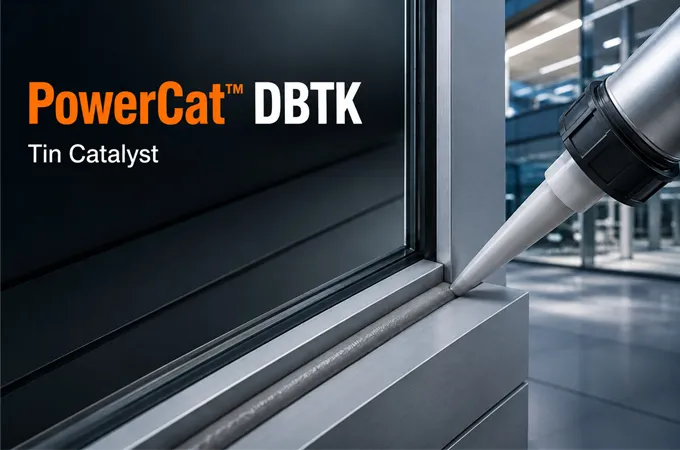
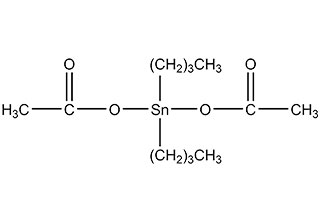
PowerCat™ DBTK is a high-activity organotin catalyst based on dibutyltin bis(acetylacetonate). It is widely used as a catalyst for moisture-curing silane-terminated polymers (STP/MS Polymers), RTV silicone systems, silane condensation reactions and polyurethane applications.
Compared with conventional dibutyltin dilaurate (DBTDL), PowerCat™ DBTK provides faster curing performance, improved storage stability and lower odor, making it particularly suitable for one-component moisture-curing sealants and adhesives.
PowerCat™ DBTK is compatible with most organic solvents but is sensitive to moisture and should be handled under dry conditions.
CAS No. | 22673-19-4 |
EINECS No. | 245-152-0 |
Formula | C16H34O4Sn |
Molecular Weight | 431.16 |
Appearance | Clear yellow liquid |
Tin Content | 26.0 - 28.0 % |
Density (25°C) | 1.20 - 1.30 g/cm³ |
Viscosity (30°C) mPa·s | 10 - 50 |
These values are typical and are not intended for use as specifications.
PowerCat™ DBTK is a high-activity organotin catalyst recommended for moisture-curing silane-terminated polymers (STP/MS Polymers), RTV silicone sealants and rubber, silane condensation reactions, polyurethane coatings, adhesives and sealants, as well as other moisture-curing polymer systems.
PowerCat™ DBTK provides fast curing performance, excellent storage stability and low odor. It is particularly suitable for one-component moisture-curing systems requiring rapid cure development and efficient silane crosslinking. The catalyst exhibits good compatibility with common organic solvents and can be used in both one-component and two-component formulations. Compared with conventional dibutyltin dilaurate (DBTDL), PowerCat™ DBTK offers improved curing efficiency and enhanced formulation stability.
PowerCat™ DOTO is supplied in 25 kg pails and 200Kg drums.
Store in a cool, dry, and well-ventilated warehouse. Keep containers tightly closed and away from moisture, heat, and ignition sources. Shelf life is 12 months from the date of production when stored in original unopened packaging.
For more detailed information please refer to the material safety data sheet.



 English
 日本語
日本語 한국어
한국어 français
 Deutsch
 Español
 italiano
 русский
 português
 العربية
 tiếng việt
 PowerCat™ DBTK Technical Data Sheet