+86-25-58599930


High Consistency Rubber (HCR) silicone rubber is a high-performance material widely used in automotive, medical, electronics, and industrial applications. Known for its exceptional durability, thermal stability, and chemical resistance, HCR silicone rubber ensures long-term reliability under demanding conditions. Manufacturers and designers rely on trusted silicone rubber suppliers to source high-quality high consistency rubber for both large-scale production and specialized components. Understanding the types, applications, and processing methods of HCR silicone rubber helps optimize performance, reduce costs, and extend product life.
HCR silicone rubber, also referred to as High Consistency Rubber, is a solid, high-viscosity silicone material that requires heat and pressure to cure. Unlike liquid silicone rubber (LSR), HCR is supplied as sheets or slabs and is ideal for processes like compression molding, extrusion, and calendering.
Key properties include:
Excellent thermal stability (-60°C to 250°C)
Outstanding elasticity and mechanical strength
Chemical and UV resistance
Long-lasting performance for gaskets, seals, and industrial components
HCR’s solid form and consistent quality make it a versatile choice for demanding applications.
HCR silicone rubber can be customized to meet specific performance and regulatory requirements:
Standard HCR: General-purpose silicone with excellent heat and chemical resistance.
Flame-Retardant HCR: Modified to meet fire safety standards, ideal for electronics and construction.
Medical/FDA-Grade HCR: Biocompatible, non-toxic, suitable for medical devices, food contact, and sterilizable applications.
Additional customizations include hardness (Shore A scale), color, and reinforced mechanical properties to meet precise industrial needs.
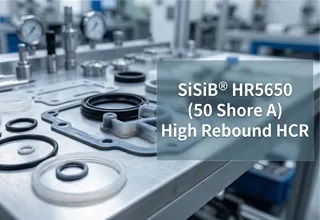
Although both are silicone rubbers, HCR and LSR differ in form, processing, and application:
| Feature | HCR (High Consistency Rubber) | LSR (Liquid Silicone Rubber) |
|---|---|---|
| Form | Solid, high viscosity | Flowable, low viscosity |
| Curing | Heat and pressure | Heat or room temperature (depending on type) |
| Processing | Compression molding, extrusion, calendering | Injection molding |
| Applications | Large profiles, gaskets, seals | Precision parts, complex geometries |
| Advantages | Durability, flexibility, high mechanical strength | Fast molding, intricate designs, shorter cycle times |
High consistency rubber is ideal for robust, long-lasting components, while low volatile LSR suits precision and high-volume production.
| Industry | Example Components | Key Benefits |
|---|---|---|
| Automotive | Engine gaskets, hoses, vibration-damping parts | Heat resistance, durability, flexibility |
| Medical | Tubing, seals, prosthetics | Biocompatible, sterilizable, non-toxic |
| Electronics | Keypads, cable sheaths, protective casings | Electrical insulation, flame retardant, UV resistance |
| Industrial | Conveyor belts, seals, protective covers | Chemical resistance, mechanical strength, long life |
| Consumer Goods | Kitchenware, wearable devices | Safety, flexibility, durability |
This table shows HCR silicone rubber’s versatility across sectors requiring thermal, chemical, and mechanical reliability.
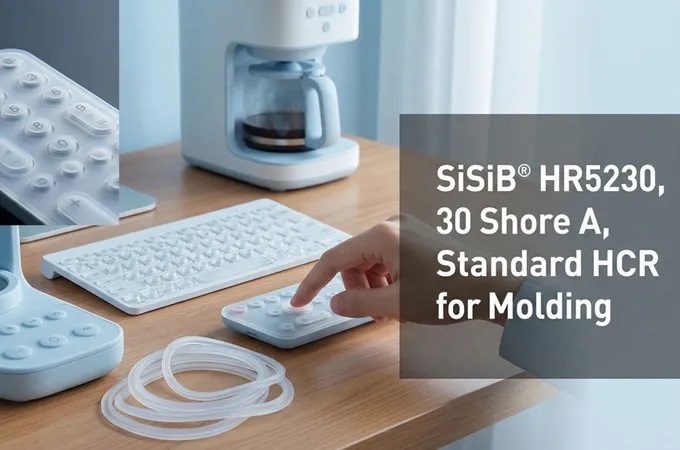
HCR silicone rubber is processed through solid-form techniques:
Compression Molding: Ideal for large and simple shapes; ensures uniform density and strength.
Extrusion: Produces continuous profiles like tubing, seals, and gaskets.
Calendering: Creates thin sheets or films for layered applications.
Transfer Molding: Handles more complex shapes with precision.
Choosing the right process depends on design complexity, production volume, and performance requirements.
Q1: Is HCR the same as HTV silicone rubber?
Yes. HCR is also called HTV (High-Temperature Vulcanizing) silicone rubber. Both terms describe solid, high-viscosity silicone requiring heat and pressure to cure.
Q2: What are the types of silicone rubber?
Silicone rubber types include:
HCR/HTV: Solid, high consistency rubber
LSR: Flowable liquid rubber for injection molding
RTV: Room Temperature Vulcanizing silicone, cures without heat
Q3: How do I choose the right HCR material?
Consider the following factors:
Operating temperature range
Mechanical requirements (hardness, elasticity, tensile strength)
Regulatory and compliance needs (FDA, RoHS, ISO standards)
Compatible processing methods
Selecting the right HCR grade ensures optimal performance and longevity for your application.
HCR silicone rubber is a high-performance material essential for industries requiring durability, flexibility, and thermal resistance. Its versatility—from automotive gaskets to medical devices and industrial seals—makes it an invaluable choice for engineers and manufacturers. Partnering with trusted silicone rubber suppliers ensures reliable access to quality high consistency rubber tailored to specific applications. Understanding the types, applications, and processes for HCR silicone rubber allows for smarter material selection, better performance, and longer product life.



 English
 日本語
日本語 한국어
한국어 français
 Deutsch
 Español
 italiano
 русский
 português
 العربية
 tiếng việt